
The 1997 Canberra Hospital Implosion

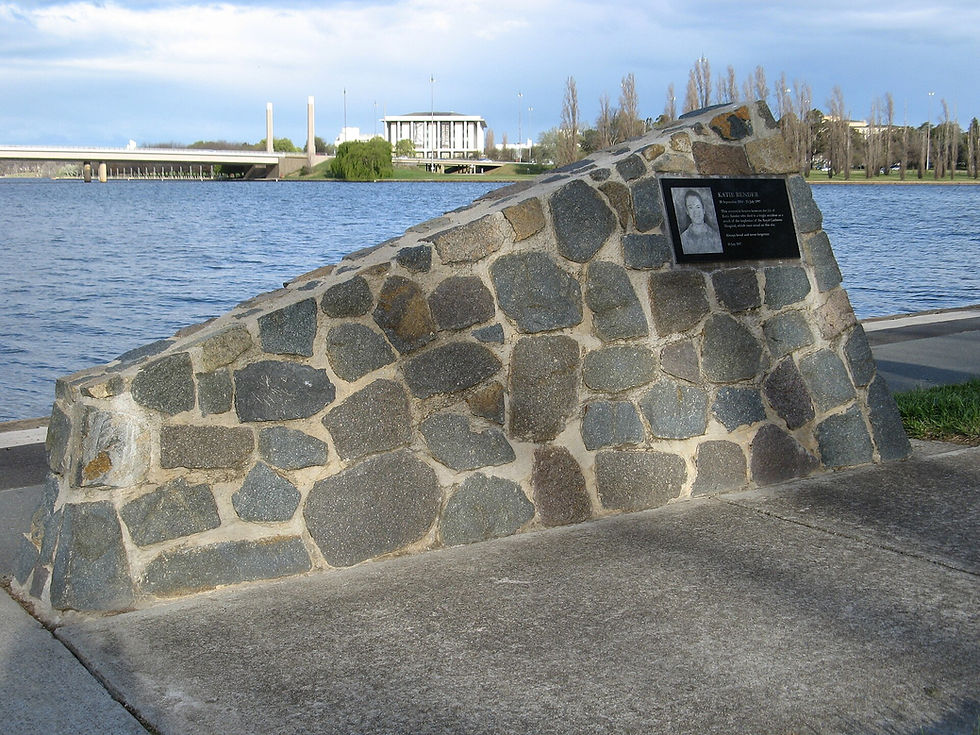
On 13 Jul 97, the former Royal Canberra Hospital was demolished by implosion at Acton Peninsula, ACT. The demolition had been promoted as a public event, and a large crowd gathered around Lake Burley Griffin to watch. Twelve-year-old Katie Bender was killed when she was struck by a fragment of steel expelled from the Main Tower Block during the demolition.

The coronial findings are important because they do not suggest that implosion is inherently unacceptable. The Coroner concluded that the death resulted from failures by those involved in the project to adequately comply with applicable standards, codes and contractual requirements, and from the use of a complex demolition method without the competence and control the task demanded. ACT Coroner’s findings.
Background from hospital to redevelopment
Royal Canberra Hospital closed on 27 Nov 91. Its Acton Peninsula site subsequently became part of plans for the National Museum of Australia, with an in-principle land exchange agreed between the Commonwealth and ACT governments in Apr 95. A demolition feasibility study followed in Jul 95, and on 04 Aug 95 the ACT Cabinet approved a submission recommending implosion. The project therefore developed over years before the explosives were fired. Historical background and chronology.
For the safety analysis, that distinction matters because decisions about procurement, technical advice and the demolition method were available well before the final preparations. Treating the incident as something that went wrong at the moment of detonation leaves those earlier opportunities unexplored. A project can become difficult to stop long before anyone formally gives permission to proceed.
Timeline leading to the implosion
The following chronology identifies selected decisions and warning points in the project. Read together, they show the gap between preparing a work method and demonstrating that the work actually being undertaken remained within it. Coronial chronology and detailed findings.
Date | Recorded event |
27 Nov 91 | Royal Canberra Hospital closed. |
Apr 95 | An in-principle land exchange supported plans for the National Museum of Australia. |
04 Aug 95 | ACT Cabinet approved a submission recommending implosion. |
13 Dec 96 | Project Coordination Australia was engaged as project manager. |
11 Apr 97 | Contracts approved for City and Country Demolition, using Controlled Blasting Services. |
18 Apr 97 | The Chief Minister’s media adviser approved MIX106.3’s public-event proposal. |
16 May 97 | The submitted workplan specified specialised shaped charges. |
02 Jun 97 | Written information on debris and safe viewing distances was requested but not supplied. |
25 and 27 Jun 97 | Specialised cutting charges were demonstrated onsite. |
02 Jul 97 | A WorkCover-convened meeting considered the nearby hospice and demolition arrangements. |
08 Jul 97 | The explosives subcontractor told the supplier the ordered cutting charges would not be used. |
Final 48 hours | Another 175 kg of explosive was purchased. |
13 Jul 97, 1300h | Scheduled firing was delayed after fireworks debris damaged the firing circuit. |
13 Jul 97, about 1330h | The Main Tower Block was detonated; Sylvia Curley House followed. |
The practical significance of this sequence is the need to connect each decision to an enforceable condition for continuing work. Requesting information should create a deadline, a responsible reviewer and a consequence if an adequate response does not arrive. Otherwise, the request records an unresolved concern while the work continues around it.
When a demolition became a public event
The demolition attracted a crowd estimated at more than 100,000, and nine people were injured in addition to Katie’s death. Debris reached locations up to a kilometre from the demolition site, and the Main Tower Block required further demolition afterwards. Incident overview.

Promoting attendance creates a foreseeable audience whose safety must be considered in the work design. A spectator cannot verify the explosive arrangement, determine whether a structural alteration has been reviewed or assess the credibility of a nominated viewing distance. Those decisions sit with the people who control the work and its technical information.
Crowd management can keep people behind a nominated boundary, but that only works as a safety measure if the boundary is appropriate for the hazard. A well-marshalled crowd can still be exposed when the underlying distance is wrong. The physical reach of projected material must determine where people can safely be, including across water and outside the property boundary.
What physically went wrong
The Coroner identified excessive and unsuitable explosives, steel backing plates, incorrect column cuts, inadequate testing and deficient protective measures. The blast arrangement directed material towards spectators across the lake. The findings also identified missing continuing advice from an experienced structural engineer and an independent explosives specialist. Executive summary, contributing factors.
The fatal steel fragment weighed 999 g and travelled approximately 430 m in about 3.1 seconds (just under 500km/h). The findings recorded incomplete sandbag protection around columns from which it probably originated, with photographs taken before firing documenting the condition. Executive summary, manner and cause of death.
Those measurements explain why the control problem had to be resolved before initiation. Once a fragment is moving across that distance in seconds, a warning, a marshal or a spectator’s reaction cannot provide a dependable defence. Prevention has to address how the energy is released, what can become a projectile and where the resulting material can travel.
Where the system failed
High-energy demolition creates hazards that do not stop at the construction fence. Fragment projection, blast effects, structural behaviour, exclusion distances and crowd location are public safety issues as much as worker safety issues. Once the event was turned into a spectacle, the consequence of getting those assumptions wrong increased substantially.
The case also illustrates the danger of fragmented accountability. A principal, consultants, demolition specialists, contractors and regulators may each hold part of the safety picture, but the physical hazard does not care how responsibilities were divided in a contract. Someone must retain clear engineering authority and someone must verify that the proposed method, exclusion zone and protective measures actually reflect the credible consequences.
My reading of the sequence is that the crucial management failure was allowing progress without closing the questions on which safe progress depended. An assurance that a changed method is still safe needs an identifiable technical basis. The person accepting that assurance must understand its limits, know who is competent to assess it and require the evidence before work passes the next hold point.
Competence also needs to match the decision being made. Experience managing construction contracts does not, by itself, establish competence to evaluate an explosive demolition design. A capable manager should be able to recognise that limit and obtain independent advice, with enough time and authority for the advice to alter the programme.
What the investigation adds
The inquest heard evidence over 118 sitting days. It examined the project’s development as well as the fatal event. Coronial report, overview of the inquest.
That approach is useful when investigating serious incidents because the final physical failure is only part of the explanation. The investigation needs to establish which decisions created the exposure, what information was available at each stage and why the work was allowed to continue. A conclusion that merely says the demolition was unsafe gives a future project team little guidance about the decisions it must control.
For an investigation of this kind, I would want the approved workplan alongside the method actually used, with each material departure traced to its authorisation and supporting evidence. I would also examine unanswered technical requests, the basis for public exclusion arrangements and who could stop the work. The purpose is to establish how decisions were made and tested, rather than treating the existence of documents as proof that their requirements were met.
The control point
The decisive control point is the release of work after a material change to the demolition design. A change affecting explosive behaviour, structural preparation or the potential for debris projection should reopen the engineering assessment and the public protection arrangements. Approval of an earlier method cannot establish that a different method is acceptable.
A useful hold point is a decision with evidence attached. It identifies the approved design revision, records the independent technical review and confirms that the installed arrangements match what was assessed. It also identifies who can authorise continuation and who can require the job to remain stopped when a condition has not been satisfied.
For a public-facing operation, event arrangements need to remain conditional on that technical decision. Advertising, invited guests and a scheduled start time cannot resolve an incomplete assessment. If adequate protection cannot be demonstrated, postponement needs to remain an available and workable outcome.
What it means for WHS today
This incident occurred in 1997, and present-day legal requirements should be checked separately from the historical findings. Safe Work Australia’s current model Demolition Work Code of Practice provides guidance for demolition contractors and those who manage or control relevant workplaces. Its legal effect depends on adoption in the applicable jurisdiction. Safe Work Australia, Demolition Work Code of Practice.
The practical application extends to other work capable of harming people beyond the immediate work area, including lifting, pressure testing and vehicle movements beside public access. The assessment needs to follow the hazard through its credible travel path. A property boundary, work package or contractor interface does not interrupt that path.
The hierarchy of controls also matters. If material can reasonably travel beyond the proposed exclusion zone, a better sign or another marshal cannot make the distance adequate. The work method, physical protection or exclusion arrangements must be changed and reassessed until exposure is controlled.
For high-energy demolition, my expectation would be a named technical authority, independent review proportionate to the consequences and formal approval of material changes. Before initiation, there should be documented verification that the protective measures and exclusion arrangements have been installed as designed. Emergency planning must also consider casualties and access difficulties beyond the worksite, without treating response capacity as a substitute for prevention.
The Safety Jon take
For me, the value of the Canberra case is in examining what an assurance actually means at the point it is accepted. A statement that the work is safe needs to identify the method being assessed, the assumptions behind that assessment and the conditions that must remain true. If those conditions change, the decision needs to be made again.
Before authorising work of this consequence, I would expect to see the final design matched against the installed arrangements, with discrepancies resolved by the people competent to assess them. Unanswered questions about projected material or public protection would keep the hold point closed. That is where the safety system has to influence the job, while there is still a decision left to make.
I extend my condolences to Katie's family.
Sources and further reading
The historical chronology and findings are drawn from the ACT Coroner’s report and executive summary, with general background cross-checked against the linked incident overview. The operational interpretation and suggested controls are Safety Jon’s commentary, and should be read separately from the Coroner’s findings. ACT Coroner, Katie Bender inquest report. ACT Coroner, executive summary. Royal Canberra Hospital implosion, historical overview. Safe Work Australia, model Demolition Work Code of Practice.
This article is general educational commentary based on public investigation material. It is not legal advice and should not be treated as a substitute for jurisdiction-specific professional advice.


Comments