
Fatal Lessons from the Crazy Train Salvage

On 27 Jan 21, marine salvage worker Max Haywood was fatally struck by the collapsing mast of a submerged steel yacht during a crane operation at Rozelle, New South Wales. The lift involved an uncertain load, an unsuitable lifting point, overloaded equipment and an operator who did not hold the required crane licence.
The incident was not caused by an obscure technical defect or an unforeseeable change in conditions. It developed from a work method that replaced engineering, verified capacity and competent planning with experience, improvisation and an instruction to stop if the crane began to tip.
By the time a crane starts tipping, the warning has arrived several controls too late.
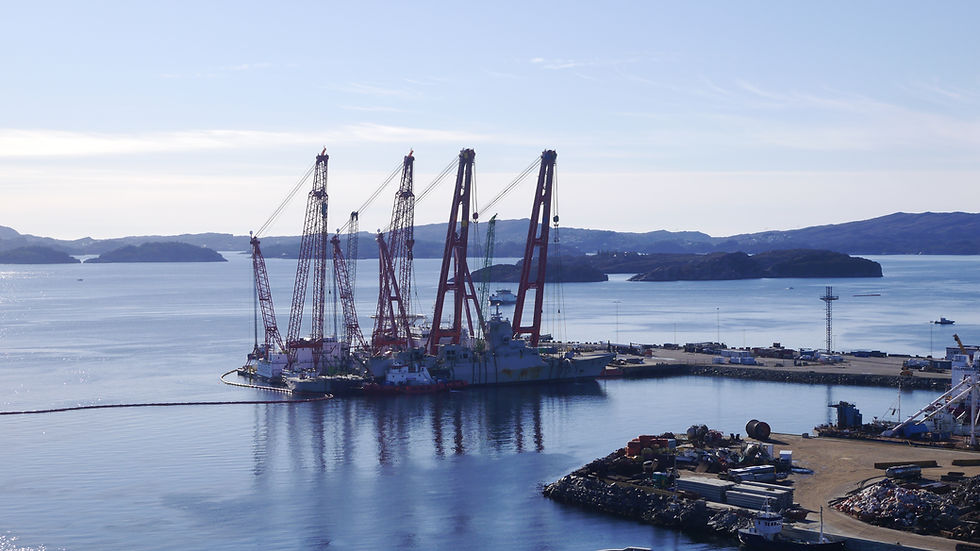
What happened at Rozelle
AWB Contractors Pty Ltd specialised in marine construction and salvage work around Greater Sydney, Australia. In Dec 20, it quoted Transport for NSW to recover and dispose of two submerged steel yachts from the Rozelle Bay Maritime Service Centre.
Transport for NSW accepted the quotation on 20 Jan 21. The work included righting the vessels, pumping them out, towing them to AWB’s yard, lifting them from the water and cutting them up for disposal.
On 25 Jan 21, AWB workers attended the Transport for NSW site to recover one of the yachts, named "Crazy Train". The yacht was completely or partly submerged depending upon the tide, and its precise weight was not known.
A single synthetic sling, rated to four tonnes, was placed in a choke hitch around the yacht’s mast. A truck-mounted crane aboard the workboat Ability was then used to pull on the mast, stand the yacht upright and bring it against the side of the workboat.
Workers pumped water from Crazy Train and towed it to AWB’s Rozelle yard, where it was secured beside a barge. The yacht subsequently began sinking again and was left submerged and suspended by lines from the stern of the barge.
No work occurred on Australia Day. When work resumed on 27 Jan 21, the crew attempted to raise the yacht using the same sling attached to its mast and a crawler crane mounted on the barge.
The intention was to lift the yacht sufficiently to allow water to be pumped from the hull before placing slings underneath it for the final lift. As the bow was raised, the mast failed and struck Mr Haywood, who was working nearby on the deck of the barge.
This distinction matters because the fatal lift did not occur at the Transport for NSW Maritime Service Centre. The yacht had been recovered from that site two days earlier, towed to AWB’s yard and allowed to sink again before the lift that killed Mr Haywood.
A submerged vessel is not a known load
A crane lift should begin with a defined load, verified lifting points, an established centre of gravity, suitable lifting equipment and confirmation that the crane can safely perform the lift at the required radius. Crazy Train provided none of that certainty.
The yacht’s actual mass was unknown. A naval architect later estimated its weight at approximately 7.54 tonnes, but the amount of water remaining or becoming trapped within the vessel could not be determined precisely.
Water also changes the load during the lift. A submerged vessel benefits from buoyancy, but as it rises through the surface, the crane progressively assumes more of the vessel’s weight while entrained water may continue adding load.
This means the force on the crane hook is not necessarily constant. Vessel movement, wave action, water draining or shifting, the angle of the hull and changing sling geometry can all alter the forces being transferred through the crane, sling and lifting point.
The expert evidence accepted by the NSW District Court was that the estimated load exceeded the capacity of both the crane and the sling by a significant margin. The expert could not identify any credible point in the actual lifting cycle at which the operation would have remained within the crane’s rated capacity.
This was therefore not a routine lift that merely required an experienced operator. The Court accepted that lifting a submerged yacht of uncertain weight from an unrated connection point should have been treated as a designed or engineered lift and assessed by a competent person.
A mast is not a lifting point
The yacht’s mast was designed to support sails and transfer sailing forces through the vessel’s rigging and structure. It was not a certified lifting point designed to carry the mass of a waterlogged steel yacht.
Before any lift, the organisation must verify that each connection point can withstand the forces generated by the proposed lifting method. Apparent strength, convenient access and previous use do not establish a rated capacity.
A component may perform adequately under its normal design loads but fail when subjected to a concentrated load, an abnormal direction of force or dynamic movement. Corrosion, age, impact damage and prolonged submersion further reduce the reliability of assumptions about structural integrity.
The sling arrangement also mattered. A sling’s working load limit depends upon its condition, configuration, connection method and the angles created during use, rather than the number printed on its tag being treated as universally available capacity.
The Court found that AWB should have prohibited workers from using fittings or fixtures that were not designed as lifting points, expressly including a yacht mast. That was not a control invented with hindsight, as suitably rated slings could have been placed beneath the hull using competent divers, or the lift could have been undertaken using the barge’s 50-tonne A-frame system.
Operating a crane “by feel”
Evidence before the Court described a longstanding practice of estimating vessel weight and crane loading by feel. Workers had reportedly watched for crane tracks lifting or listened for sounds from the securing turnbuckles as indicators that the crane was approaching overload.
Mr Whitmarsh instructed the worker operating the crane to back off if the crane started going “on its toes”. The Court described that instruction as cavalier and dangerous because a crane that has begun to tip is already beyond its safe operating limit.
A load chart is not an optional reference used after a crane becomes unstable. The load mass, lift radius, boom or jib configuration, vessel stability and any applicable derating must be established before the lift begins.
The crane involved was labelled as having a safe working limit of approximately 34 tonnes, but that figure applied only at a short lift radius and under its specified configuration. Crane capacity reduces as radius increases, while a vessel-mounted crane may require further derating compared with its land-based capacity.
Treating the maximum figure displayed on a crane as its capacity for every lift is a basic but dangerous error. The relevant capacity is the rated capacity for the actual configuration, radius, mounting arrangement and operating conditions.
The NSW District Court judgment referred to Australian Standard AS 2550.1, which requires the working radius and load mass to be established before lifting. Where the assessed load exceeds 50 per cent of the crane’s rated capacity at that radius, the mass is to be determined through weighing or calculation.
Neither tipping nor equipment distress is a measuring instrument. If a business needs the crane to physically demonstrate instability before the operator knows the load is excessive, it does not have a lift plan, it has an uncontrolled load test involving workers.
Competency must match the task
The worker directed to operate the barge-mounted crane did not hold the applicable high-risk work licence and had not received formal training in operating it. He had informed Mr Whitmarsh of that fact before the incident.
The Court found that Mr Whitmarsh nevertheless directed him to conduct the lift. The operator had received informal instruction from other workers, but there were no adequate training records, competency verification processes or evidence that he could interpret the load charts and safely plan the operation.
Crane operation and dogging are related but distinct competencies. The crane operator controls the plant, while dogging work involves selecting lifting equipment and slinging methods, directing the crane operator and exercising judgement about load mass, centre of gravity and load movement where the load is outside the operator’s view.
Complex salvage work may require additional specialist capability. Competent commercial divers may be needed to inspect the submerged vessel, assess its condition, install slings beneath the hull and support a lifting method that does not depend upon grabbing whatever part of the vessel happens to be accessible.
This case also demonstrates why years spent performing a task do not automatically establish competence. Experience can develop knowledge and skill, but repeating an unsafe method without consequence can equally embed confidence in a practice that has never been technically sound.
Competency therefore needs to be verified against the actual role and task. Licences, formal training, demonstrated capability, familiarity with the specific plant and understanding of the proposed lift must all be considered before somebody is authorised to operate or direct high-risk work.
Nobody should be beneath or beside an uncontrolled load.
The immediate risk identified by the prosecution was that workers could be struck or crushed by the load, part of the load, the crane or the lifting equipment. Mr Haywood was on the barge deck within the area affected when the mast failed.
An effective exclusion zone should account for more than the space directly beneath the crane hook. It must consider the potential fall path, boom movement, sling failure, mast or structural collapse, load swing, vessel roll, line recoil and movement caused by wind, wash or water.
SafeWork NSW subsequently advised operators to prevent suspended loads from passing over people and establish an exclusion zone around the load. Only a qualified dogger should enter that area where the task makes entry necessary.
Where reasonably practicable, the task should be controlled from land or another position outside the potential collapse and strike zone. Workers should not be stationed next to the load to compensate manually for instability that should have been addressed through lift design, tag lines, rigging or other engineering controls.
Hard hats and lifejackets were available at the AWB yard but were not consistently mandated or used. Appropriate personal protective equipment was required, particularly given the combination of overhead lifting and work beside water, but PPE could not have made an overloaded lift from an unrated mast safe.
The lift required a plan, not a generic safety system
AWB had a work health, safety and environmental manual, a barge safety management system and written requirements covering crane competence, load charts, training and safe work documentation. The existence of these documents did not result in the Crazy Train lift being properly assessed or controlled.
There was no adequate risk assessment for the recovery and lifting work. There was also no task-specific SWMS, daily job safety analysis or toolbox talk before the fatal operation.
A salvage lift plan should have addressed:
The vessel’s known or estimated dry mass and the uncertainty created by entrained water.
The lifting stages, working radii, equipment configurations and changing load through the waterline.
The capacity of the crane, barge, slings, chains, shackles and each proposed lifting point.
The vessel’s condition, structural integrity, centre of gravity and possible movement.
Weather, tide, wash, swell, mooring stability and the risk of lines failing.
The required crane, dogging, diving and supervisory competencies.
The exclusion zone, worker positions and methods for controlling the vessel.
Communication arrangements between the crane operator, dogger, divers and barge crew.
Stop criteria, contingency arrangements and emergency rescue capability.
The method for verifying that the plan had been understood and was being followed.
The purpose of that planning is not to describe an unsafe method neatly. It is to test whether the proposed method is technically possible within the limits of the plant and whether a safer alternative should be used.
Within a short period after Mr Haywood’s death, AWB produced more appropriate SWMSs and conducted a toolbox talk. The Court considered this evidence that suitable controls were available and could have been implemented before the incident.
The officer duty was personal and proactive
AWB pleaded guilty to a Category 2 offence involving a breach of its primary duty under section 19 of the Work Health and Safety Act 2011 (NSW). Mr Whitmarsh pleaded not guilty to failing to exercise due diligence as an officer, but the Court found the charge proven beyond reasonable doubt.
Section 27 requires an officer to exercise due diligence to ensure the PCBU complies with its duties and obligations. This includes acquiring current WHS knowledge, understanding the organisation’s operations and hazards, providing appropriate resources and processes, responding to safety information and verifying that those resources and processes are actually used.
The Court found that Mr Whitmarsh was at the centre of AWB’s safety system and, in practical terms, “was the system”. He controlled the work, held responsibility for the safety arrangements and personally directed the use of the mast and the unlicensed crane operator.
The failure therefore extended well beyond inadequate paperwork. He had not ensured that AWB assessed the load, selected suitable plant, operated within load limits, used rated lifting points, engaged competent people or kept workers clear of the danger area.
On 23 Jul 25, the NSW District Court fined AWB Contractors $765,000. Mr Whitmarsh was fined $300,000 personally, bringing the combined penalties to $1.065 million before costs.
The officer prosecution is examined separately in the Safety Jon article, Director Slammed Over Fatality: When Due Diligence Fails, Workers Die. This incident also deserves attention as an operational failure because officer oversight cannot compensate for a lift that has never been technically designed.
Lessons beyond marine salvage
The decision arose under New South Wales legislation, but the operational lessons apply wherever uncertain or abnormal loads are lifted. The section 27 duty is also reflected throughout Australia’s model WHS jurisdictions, although Victoria applies a separate officer-liability framework under the Occupational Health and Safety Act 2004.
The same failure pattern can arise when lifting damaged plant, recovering rolled vehicles, removing storm-damaged structures, extracting submerged equipment or handling loads whose mass and centre of gravity have changed. In each case, the work may look familiar while the load conditions are materially different.
Before approving a non-routine lift, an organisation should be able to produce reliable answers to several basic questions. If those answers depend on feel, habit or waiting for the crane to complain, the lift is not ready to proceed.
The organisation should know:
What the load weighs, including credible allowances for water, contents and contamination.
Where the centre of gravity is likely to sit and how it may move.
Which points are designed or verified to accept lifting forces.
What the crane can lift at the actual radius and configuration.
Whether the lifting gear remains within its working load limit in the proposed arrangement.
Which person designed, checked and authorised the lift.
Whether the operator, dogger, rigger and any specialist workers are competent and licensed.
How people will remain outside every credible fall, swing, collapse and recoil zone.
What conditions will stop the work before plant instability or equipment distress occurs.
These are not questions for the incident investigation. They are the minimum information required before the crane hook is connected.
The lasting lesson
Max Haywood went to work on 27 Jan 21 to help recover a yacht that had already been salvaged, pumped out, towed away and then allowed to sink again. He was killed when workers attempted to raise it using an overloaded crane and sling connected to a mast that was never designed to carry the vessel.
The SafeWork NSW incident alert now tells operators to plan lifts thoroughly, account for load variation and water movement, use cranes within their design capacity and establish effective exclusion zones. Those controls were available before this incident and did not require technological invention or the benefit of hindsight.
The central lesson is blunt.
Non-routine lifting operations must be engineered around verified loads, rated equipment, suitable lifting points and competent people, because experience cannot negotiate with physics and a tipping crane is not an early warning system.


Comments